
17th June 2019
Presentation on last week's progress. This week's task:
- Identify WEC mechanism
- Study the power take-off of WEC
18 June 2019
Based on some readings done from the International Renewable Energy Agency (IRENA) Ocean Energy Report 2014 and several other research papers and articles, there are eight types of WEC devices namely:
- overtopping device
- oscillating water column device
- oscillating wave surge converter
- wave attenuator
- bulge wave device
- rotating mass device
- floating point absorber
- submerged pressure differential
Today's focus will be on two devices which are the oscillating water column and overtopping device.
Oscillating Water Column Device
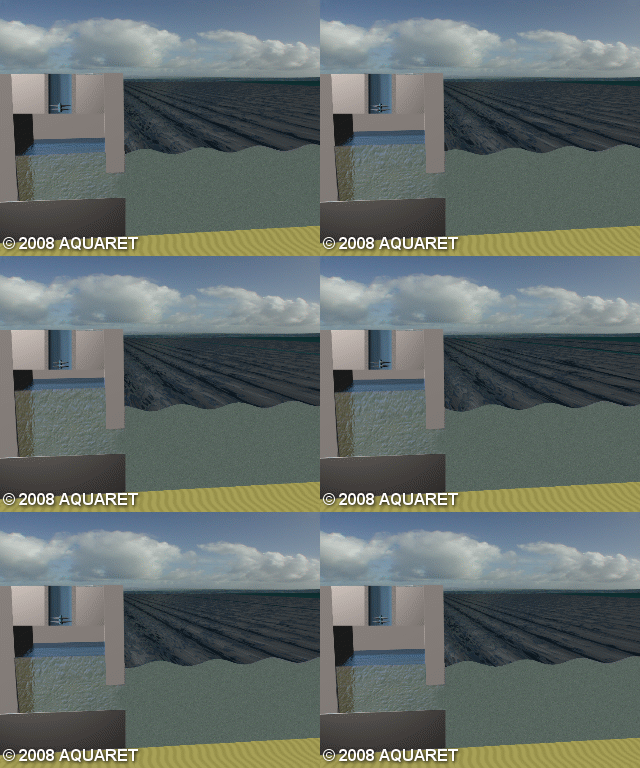
Oscillating water column device consists of an air chamber with its lower end open to the ocean and its top connected to the surrounding atmosphere via an air turbine. As the waves oscillate within the chamber, air is pushed through the turbine forcing it to spin and drive an electric generator.
Overtopping Device
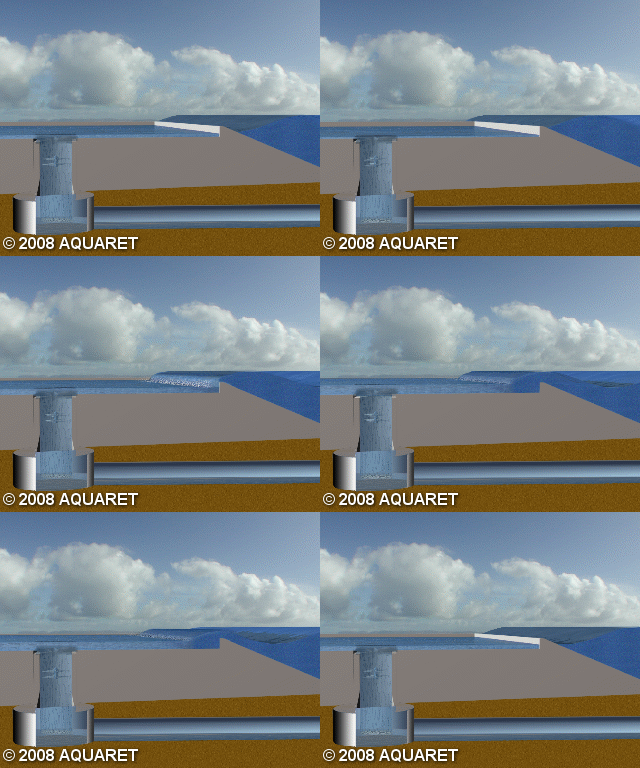
Overtopping devices use the action of the waves to deposit water into a reservoir (sometimes via a concentrating collector) above the mean water level. This is then returned to the sea via a low head turbine which converts the potential energy to electricity.

19th June 2019
Did some reading on wave attenuator, floating point absorber and bulge wave device.
Wave Attenuator
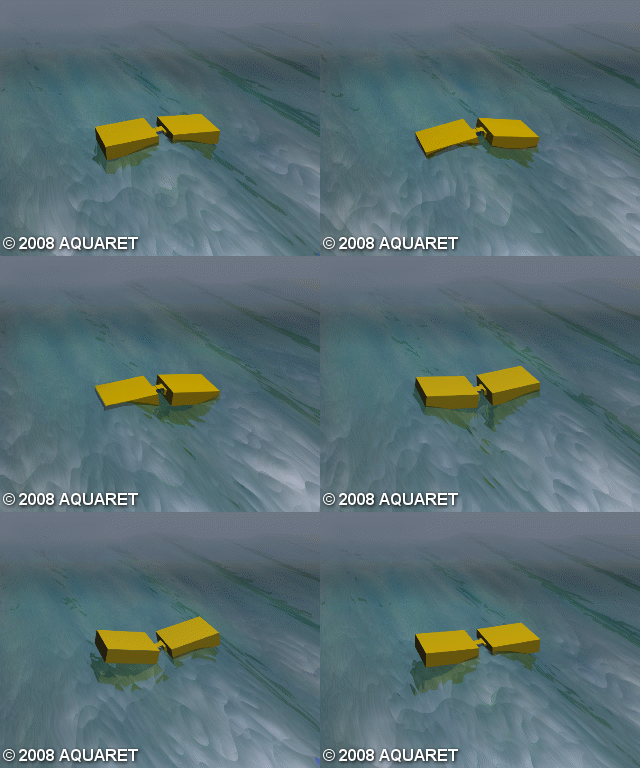
A long floating structure with multiple segments connected together floats parallel with the waves and acts in a similar concept as the point absorber, flexing as differing wave heights occur. The segments then drive a hydraulic pump, or other energy converter, that is connected to. Electricity is then feed from a transformer held in the nose of the structure to a cable in the ocean floor to the shore to be put onto the grid.

Floating Point Absorber
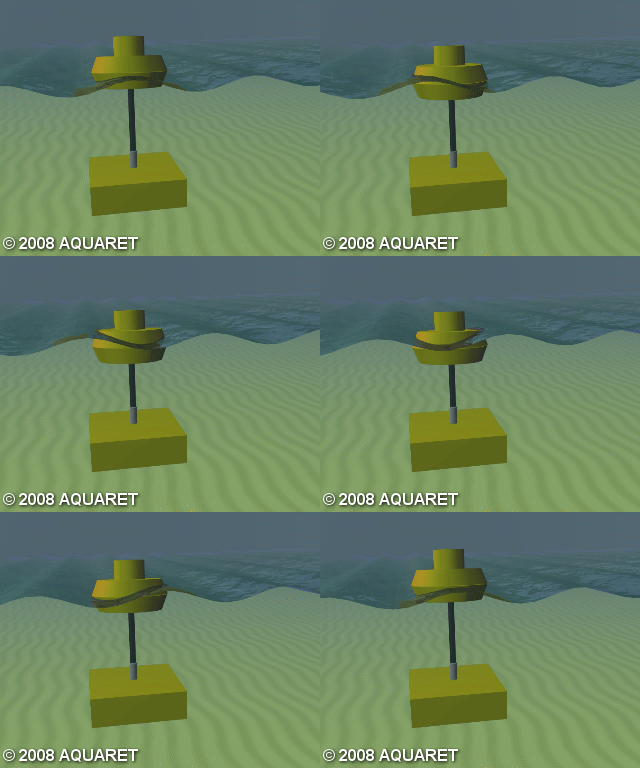
A point absorber is a floating structure which absorbs energy from all directions through its movements at/near the water surface. It converts the motion of the buoyant top relative to the base into electrical power. The power take-off system may take a number of forms, depending on the configuration of displacers/reactors.

Bulge Wave Device
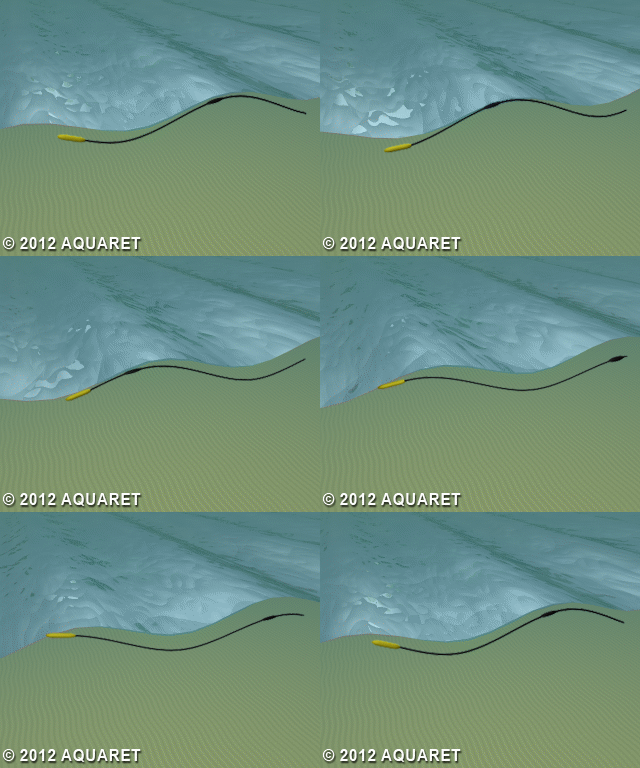
Bulge wave technology consists of a rubber tube filled with water, moored to the seabed heading into the waves. The water enters through the stern and the passing wave causes pressure variations along the length of the tube, creating a ‘bulge’. As the bulge travels through the tube it grows, gathering energy which can be used to drive a standard low-head turbine located at the bow, where the water then returns to the sea.
20th June 2019
Research on oscillating wave surge converter, submerged pressure differential and rotating mass device.
Oscillating Wave Surge Converter
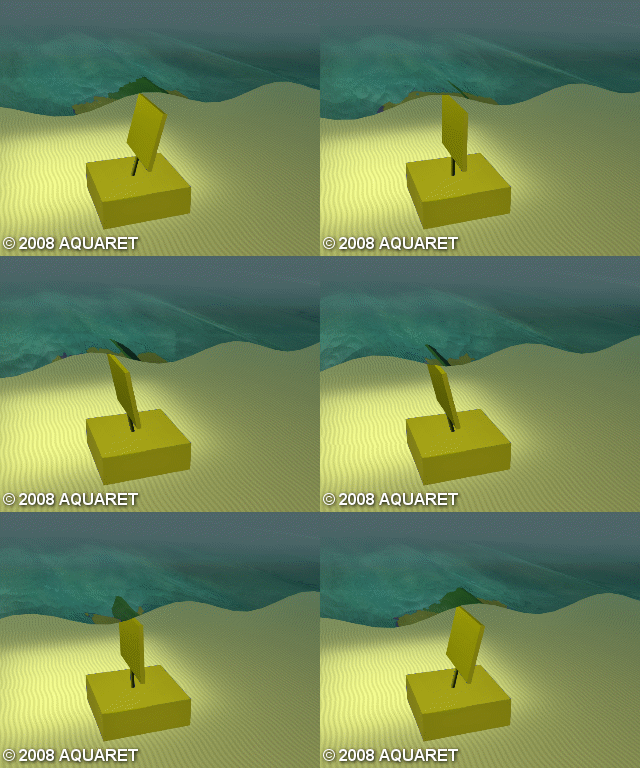
The oscillating wave surge converter consists of a paddle rotating about a horizontal axis above the water surface and perpendicular to the direction of wave propagation. The paddle hangs at the mouth of a gully, effectively forming a ‘water column’ between the paddle and gully back wall.
Submerged Pressure Differential
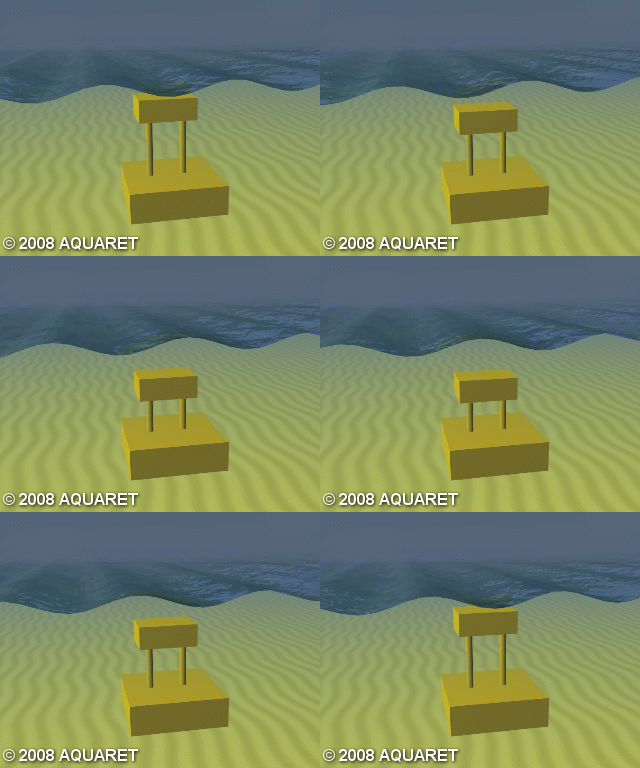
Submerged pressure differential devices are typically located near shore and attached to the seabed. The motion of the waves causes the sea level to rise and fall above the device, inducing a pressure differential in the device. The alternating pressure pumps fluid through a system to generate electricity.
Rotating Mass Device
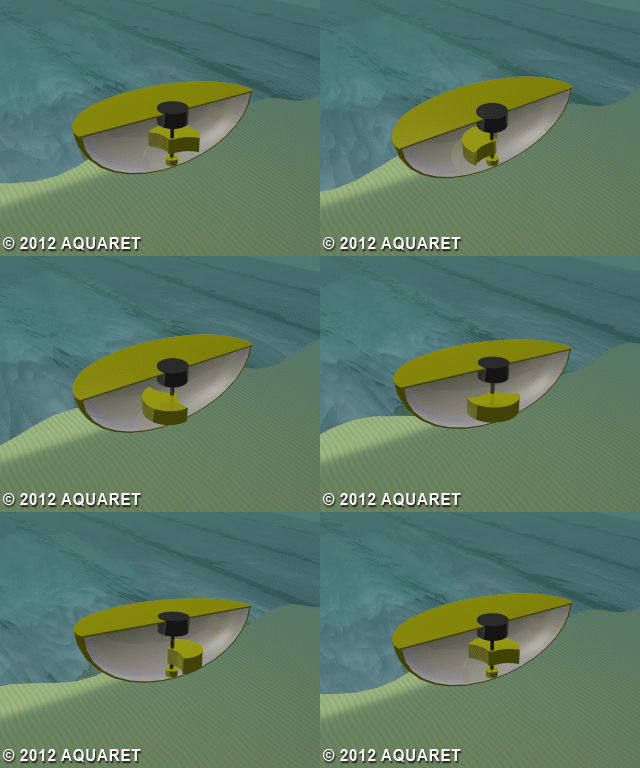
Two forms of rotation are used to capture energy by the movement of the device heaving and swaying in the waves. This motion drives either an eccentric weight or a gyroscope causes precession. In both cases the movement is attached to an electric generator inside the device.
21st June 2019
Studied on the power take-off (PTO) of WEC devices. Able to identify the PTO for each WEC device.
Power Take-Off Systems
At the end of the day, there devices which are seen as suitable with Malaysian wave condition were selected. Those devices were overtopping device, oscillating wave surge converter ans submerged pressure differential. Among these three devices, overtopping device seems to be the best possible option so far.
PowerPoint presentation was prepared for next Monday's progress meeting.